
Loading...
Serving Minot, ND and surrounding areas. (701) 401-8015
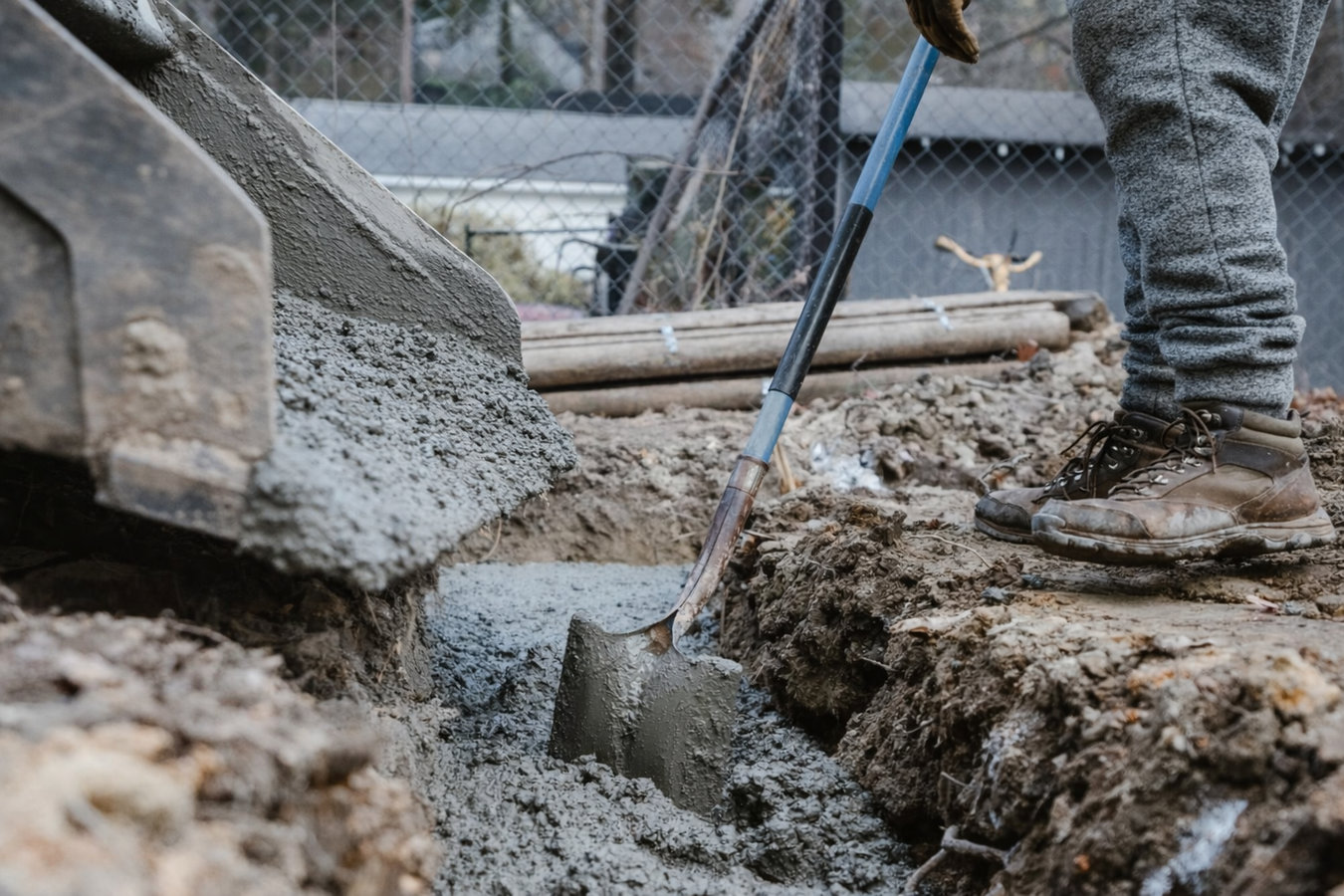
Every deck, garage, or addition in Minot needs footings deep enough to outlast North Dakota winters. Shallow footings heave, shift, and crack - proper ones stay put for decades.
Concrete footings in Minot are the buried base that carries the weight of a deck, garage, addition, or structure above them - they typically need to be dug 42 to 48 inches deep to stay below North Dakota's frost line, with most projects from digging through pouring completed in one to three days plus a curing period before framing can begin.
Most homeowners do not think much about footings until something goes wrong - a deck that wobbles, steps that have tilted away from the house, or an addition where doors no longer close properly. Concrete footings in Minot are the reason those problems happen or do not happen. When the ground freezes in a North Dakota winter, it expands upward with real force. Footings set above the frost line get pushed up and may not come back down evenly when the ground thaws. Over a few seasons, that movement adds up.
If you are planning a larger project that includes a structural base for a building, our foundation installation service covers the full scope of below-grade structural work for new construction.
If you notice a gap opening up between your deck and the house, or if steps that used to sit flush now tilt or wobble, the footings underneath may have shifted or settled. In Minot, this often happens after a harsh freeze-thaw cycle when shallow footings get pushed upward by freezing ground and never fully return to their original position. A shifting deck can become a safety hazard.
Horizontal or stair-step cracks in a concrete foundation wall, or large cracks running across a garage floor, can signal that the footings below are no longer doing their job. Minot's clay-heavy soils expand and contract with moisture and temperature changes, and over time that movement compromises footings not designed with local soil conditions in mind.
Any new structure attached to or near your home needs proper footings before framing begins. If you are in the planning stage for a project like this, now is the time to think about footings - not after the lumber is delivered. Getting the footing design right from the start is far less expensive than correcting a problem after the structure is built.
When a home's foundation shifts - even slightly - it can cause door frames and window frames to go out of square, making them hard to open or close. If you are also noticing cracks in drywall near corners or uneven floors, it is worth having a contractor look at whether footing movement is involved.
Our footing work starts with a site visit to assess the soil, confirm the required depth for your specific location in Minot, and determine how the footings need to be sized for the load they will carry. We dig to the correct depth - typically 42 to 48 inches in this area - set any forming tubes or frames, place steel rebar inside before the pour, and schedule the required city inspection before concrete goes in. For projects tied to larger structural work, our foundation raising service handles situations where an existing structure needs to be lifted and re-supported.
We handle the City of Minot building permit as part of every footing project - the city requires an inspection of the excavation before the concrete is poured, and we coordinate that visit so your project stays on schedule. After the pour, we give you a clear timeline for when framing can safely begin based on the weather and the mix used.
Suits homeowners adding or replacing a deck, covered porch, or exterior stairs attached to the house.
Suits detached garages, sheds above permit size, or agricultural outbuildings that need a code-compliant base.
Suits room additions and bump-outs where new footings must tie into or extend beyond the existing foundation.
Suits older structures where existing footings have shifted, cracked, or are shallower than current frost-depth requirements.
North Dakota has one of the deepest frost lines in the continental United States. In Minot, footings typically need to be set nearly four feet below the surface to stay below the level where the ground freezes. That is significantly deeper than what contractors in warmer states deal with, and it means more labor, more concrete, and higher project costs compared to national averages. Any contractor who proposes unusually shallow footings without a clear explanation should be questioned - saving money on dig depth is one of the most common shortcuts that leads to structural problems years down the road. Minot's older housing stock adds another layer of complexity: a significant portion of the city's homes were built in the mid-20th century, and some have footings that are shallower than what current standards require. We serve homeowners throughout the Minot area including Burlington, ND, where the same frost depth and soil conditions apply to every footing project.
The clay-heavy soils common across the Minot area create a second challenge. Clay swells when it absorbs water and shrinks when it dries out, putting repeated stress on footings over time. A footing design that accounts for local soil conditions - sometimes by widening the base or adding drainage measures nearby - performs very differently from one that uses a generic template. We also work regularly in Velva, ND and surrounding communities where the same clay soil conditions and frost depth requirements shape every project.
We schedule a visit to look at the location in person before quoting. The depth of the dig and the soil conditions can only be assessed on-site. A written estimate follows within one business day, breaking out labor, materials, and permit fees separately so you know exactly what you are paying for.
We apply for the City of Minot building permit before any work begins. This typically takes a few business days to a couple of weeks. Your contractor handles the paperwork - you do not need to do anything except confirm it has been submitted before the crew arrives.
We mark footing locations, call 811 to locate underground utilities before digging begins, then excavate to the required depth. We set forming tubes and place steel rebar before pouring. This is the right moment to ask us to walk you through what is in the ground before it gets covered.
The city inspector reviews the excavation before concrete goes in - we schedule that visit as part of the job. After the pour, we clean up and give you a specific curing timeline based on the weather. Most projects require a minimum 3-7 day wait before framing can begin on top of the footings.
Minot's construction window is short. Get your footings on the schedule early so the rest of your project stays on track.
(701) 401-8015Every footing we set in Minot goes deep enough to stay below the frost line - typically 42 to 48 inches. That is non-negotiable in this climate. We do not propose shallower footings to reduce the bid, because the cost of fixing a heaved structure later is far higher than the cost of doing it right the first time.
We pull the permit and coordinate the city inspector's visit before any concrete goes in. That means an independent set of eyes confirms the depth and setup are correct while everything is still visible. You get documentation showing the work was done to code - which matters when you sell the home.
We have set footings across the Minot area in the clay-heavy soils common to this part of North Dakota. We know how to size and position footings to handle the swelling and shrinking that clay soil does through the seasons - which reduces the risk of movement or cracking over the life of the structure.
We call 811 before every excavation as required by North Dakota law - no exceptions. This protects your yard from accidental utility line strikes and keeps the project from stalling because of an unexpected underground obstacle. It is a basic step that a responsible contractor never skips.
The American Concrete Institute sets the industry standards for footing design, rebar placement, and curing - the same standards a city inspector uses to evaluate whether your footings were built correctly. Staying current with those standards is part of how we make sure your project passes inspection the first time.
When an existing structure has already settled or shifted, foundation raising corrects the problem before new footings are added.
Learn MoreFull below-grade structural foundation work for new builds and major additions that go beyond individual footings.
Learn MoreMinot's construction window is short and contractors book fast once the ground thaws - reach out now to secure your spot and keep your project on schedule.